The Throne.

Cult Center: A temple is dedicated to her on the Island of Philae, near the first cataract. She is revered throughout Egypt.
Attributes: Isis is one of the earliest and most important goddess in ancient Egypt. She was regarded as the feminine counterpart to Osiris, a role she probably occupied before the dawn of dynastic Egypt. No other Egyptian deity has stood the test of time as well as Isis. Her cult was not extinguished with the other Egyptian gods, but was embraced by the Greeks and Romans, her worship has even lasted into the present day.She was revered by the Egyptian people as the great mother-goddess and represents the maternal spirit in its most intimate form. She is often seen suckling a young Horus. In the Osiris legend she is seen as a dutiful wife, a grieving widow and as a protector of the dead.As a winged goddess she may represent the wind. In the Osiris legend there are references to Isis wailing and moaning like the wind. She is also continually travelling up and down the land in search of her lost husband. Upon finding Osiris’ body, she takes the shape of one of the swiftest birds, a kite. Flapping and darting above his dead body she wails in mourning. She restores life to Osiris by flapping her wings and filling his mouth and nose with air.Isis was a great enchantress, the goddess of magic. Together with Thoth, she taught mankind the secrets of medicine. She was the embalmer and gaurdian of Osiris. She is often rendered on the foot of coffins with long wings spread to protect the deceased.
Representation: A woman wearing on her head the hieroglyphic symbol of her name, which represents a throne or seat. Often seen wearing horns and a solar disk on her head. Sometimes she is pictured with wings, It is noteworthy that she is one of only a few deities that we find with wings in ancient Egyptian mythology.
Relations: Daughter of Nut and Geb. Sister of Osiris, Nephthys, and Seth. Wife of Osiris. Mother of Horus.

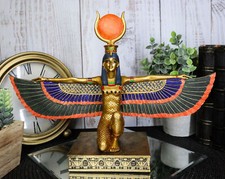
Egyptian Goddess Of Motherhood Kneeling Isis With Open Wings Statue 12.75"Long
$48.99
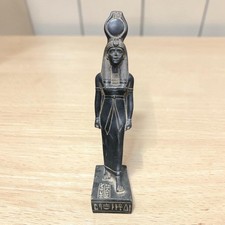
Rare Egyptian Isis Statue Antique Pharaonic Goddess Motherhood Mythology BC
$245.00
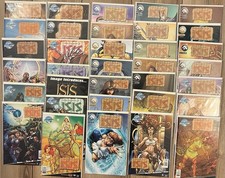
The Legend of Isis Comic Books #1-12 #1-10 Complete Sets Variants Bluewater
$45.99
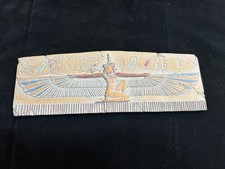
Winged Egyptian God Isis- Wall Plate
$60.00
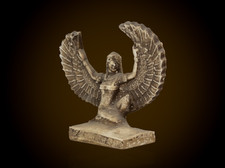
Ancient Egyptian Antiques Isis Winged Goddess Statue Dark Stone Egyptian Art BC
$90.00
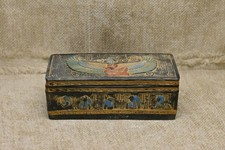
Egyptian Isis Jewelry Box Stone Sculpture, Ancient Mythology
$199.00
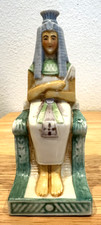
Vintage Art Deco Style Egyptian Goddess Isis 4.5" Porcelain Incense Burner
$35.99
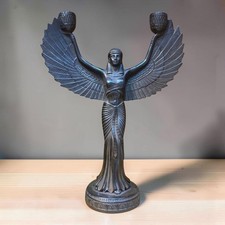
Ancient Egyptian Isis Goddess Unique Statue Rare Pharaonic Mythology BC
$139.00
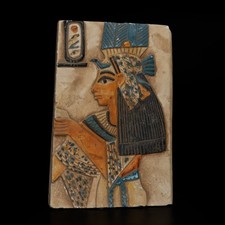
Isis relief carved limestone panel of the divine mother, Historic treasure
$143.00
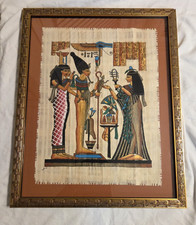
Vintage Excuisite Framed Egyptian Papyrus Painting - 19' x 15.5' Signed
$130.00