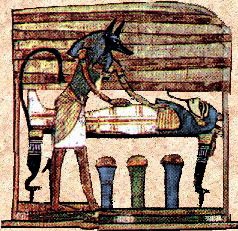
What we call the Egyptian Book of the Dead was known to the Egyptians as Reu nu pert em hru translated that means The Chapters of coming forth by day. It is a collection of chapters made up of magic spells and formulas. It was illustrated and written on papyrus. These papyri were commissioned by the deceased before their death. Like most products these text came in different qualities. You could comission the finest quality papyrus money could buy or you could purchase one “off the rack” and have a scribe fill in the blanks with your name.
This collection of funerary chapters began to appear in Egyptian tombs around 1600 BC. It can be thought of as the deceased’s guidebook to a happy afterlife. The text was intended to be read by the deceased during their journey into the Underworld. It enabled the deceased to overcome obstacles and not lose their way. It did this by teaching passwords, giving clues, and revealing routes that would allow the deceased to answer questions and navigate around hazards. It would grant the help and protection of the gods while proclaiming the deceased’s identity with the gods. The Papyrus of Ani is one of the finest and most complete examples of this type of Egyptian funerary text to survive. The Papyrus of Ani now resides in The British Museum, London.

. . The Funeral Procession of Ani.
. . The Hall of Maat
. . Judgement in the Hall of Maat
. . Fields of Peace.
. . Translation . . by E.A. Wallis Budge
. .
“YOU MUSTN’T READ FROM THE BOOK!” Or so they would have you believe in the movies. Not true, these books needed to be read by any ancient Egyptian interested in an afterlife
The Egyptian Book of The Dead by Dr. Faulkner Raymond, Ogden Goelet, Eva Von Dassow
Published by Chronicle Books
Paperback – 174 pagesMichael G. Smith . This book is an outstanding translation and presentation of the books that make up the Papyrus of Ani. Faulkner is far superior to Budge, and this book proves it out. In addition to the beautiful pictures and fine translations, the commentaries in the back, along with the explanations of the vignettes contained in the papyrus are well worth the money. A must for anyone interested in Ancient Egypt and their culture.
The Book of the Dead by E. A. Wallis Budge
Published by Grammercy
Hardcover – 704 pages. The translation is considered to be outdated and inaccurate. However, no list of books about this papyrus is complete without Budge on it. This book started my interest in all things Egyptian. Awakening Osiris : The Egyptian Book of the Dead by Normandi Ellis (Translator), Gary Robertson (Illustrator), Robert Kelley
Published by Phanes
Paperback – 227 pages
momteacher . A pleasant departure from the word-for-word translations so often presented. The author takes poetic license with the text, and turns out a work all the better for it. It is admirable in style. I have several translations of the Book of the Dead, including Dr. Raymond Faulkner’s translation (which is also quite poetic), but this one was too lyrically beautiful to resist.
How to Read Egyptian Hieroglyphs: A Step-By-Step Guide to Teach Yourself
. You need no previous experience reading hieroglyphs to benefit from this book. This is a hieroglyphs guide for the layperson, tourist, or museum enthusiast who’d like to have more of a clue when it comes to understanding Egyptian hieroglyphs. Focusing on the funerary symbols one would be likely to see in Egypt or at a museum, and illustrated with hieroglyphs that are on display in the British Museum (drawn by Richard Parkinson, curator in the Department of Egyptian Antiquities at the British Museum), How to Read Egyptian Hieroglyphs makes possible a deeper appreciation not just of museum displays but of the Egyptian culture that used this writing system.
by Mark Collier, Bill Manley, Richard Parkinson (Illustrator)
Published by University of California Press
Hardcover – 192 pages
Egyptian Grammar
Being an Introduction to the Study of Hieroglyphsby Alan Gardiner
Published by Aris & Phillips
Hardcover – 646 pagesEnzo Calabresi . A book any scholar knows and any interested one should know. It’s a milestone not only in the study of Egyptian language,but in modern philology. Maybe the style is old looking, but good language is understandable, no matter when it was written.
Concise Dictionary of Middle Egyptian
by Raymond Faulkner
Published by David Brown Book Co
Hardcover – 327 pages. This is a wonderful source of inspiration. Sometimes hard to read with it’s hand written glyphs. You may want to also consider getting the companion English-Egyptian Index by David Shennum.
English-Egyptian Index
. ……………of Faulkner’s Concise Dictionary of Middle . ……………. Egyptianby David Shennum
Published by Undena Publications
Paperback – 178 pages
. A fantastic compainion to Faulkner’s Concise Dictionary of Middle Egyptian
Reading Egyptian Art A Hieroglyphic Guide to Ancient Egyptian Painting and Sculpture
by Richard H. Wilkinson
Published by Thames and Hudson
Paperback – 224 pagesBrian V Hunt . Wilkinson is a professor at the University of Arizona (or was) and I believe may still be directing that institution’s work in the Valley of the Kings. As he points out in this volume, one of the things often missed in regards to Egyptian art is that it is intended to be “read”. Even paintings and objects in the round are often constructed using hieroglyphs. The author gives a well written, organized overview of the rudiments of learning to see into Egyptian art more of what the artist intended the viewer to see. Very nicely illustrated with an excellent selection of examples.



Funko POP Return of the Living Dead Tarman #1981 Hot Topic On Hand W/Protector
$27.99
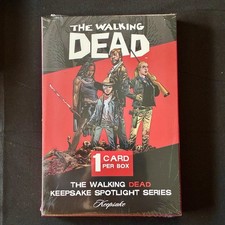
Factory Sealed - 2026 Keepsake Walking Dead LVL UP Vegas Exclusive
$21.99

The Walking Dead Book 14 Image Comics (2017) - Hardcover, Sealed
$20.00

The Walking Dead Volume 1: Days Gone Bye Image Comics (2008) - Paperback
$10.00
Dead February 2016 Lootcrate Lootpin Pin Pinback
$12.99

Return of the Living Dead - Tarman Mask - Trick or Treat Studios
$50.99
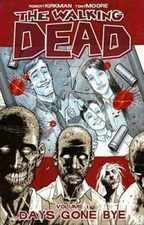
The Walking Dead, Vol. 1: Days Gone Bye - Paperback - VERY GOOD
$4.32
![Funko POP Movies: Return of the Living Dead - Zombie Trash [New Toy] Vinyl Fi picture](/store/img/g/3~0AAeSwGrlqBLR~/s-l225/Funko-POP-Movies-Return-of-the-Living-Dead-Zombie-.jpg)
Funko POP Movies: Return of the Living Dead - Zombie Trash [New Toy] Vinyl Fi
$15.98

2026 KEEPSAKE THE WALKING DEAD PREMIERE BREAKER BOX
$29.99
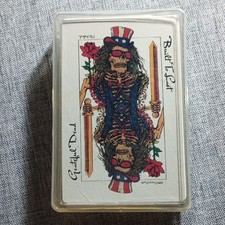
Grateful Dead, Vintage Playing Cards w/ Jokers , special "Built to Last" promo
$32.95